How Can Real Time Analytics Dashboards Improve Incident Response?
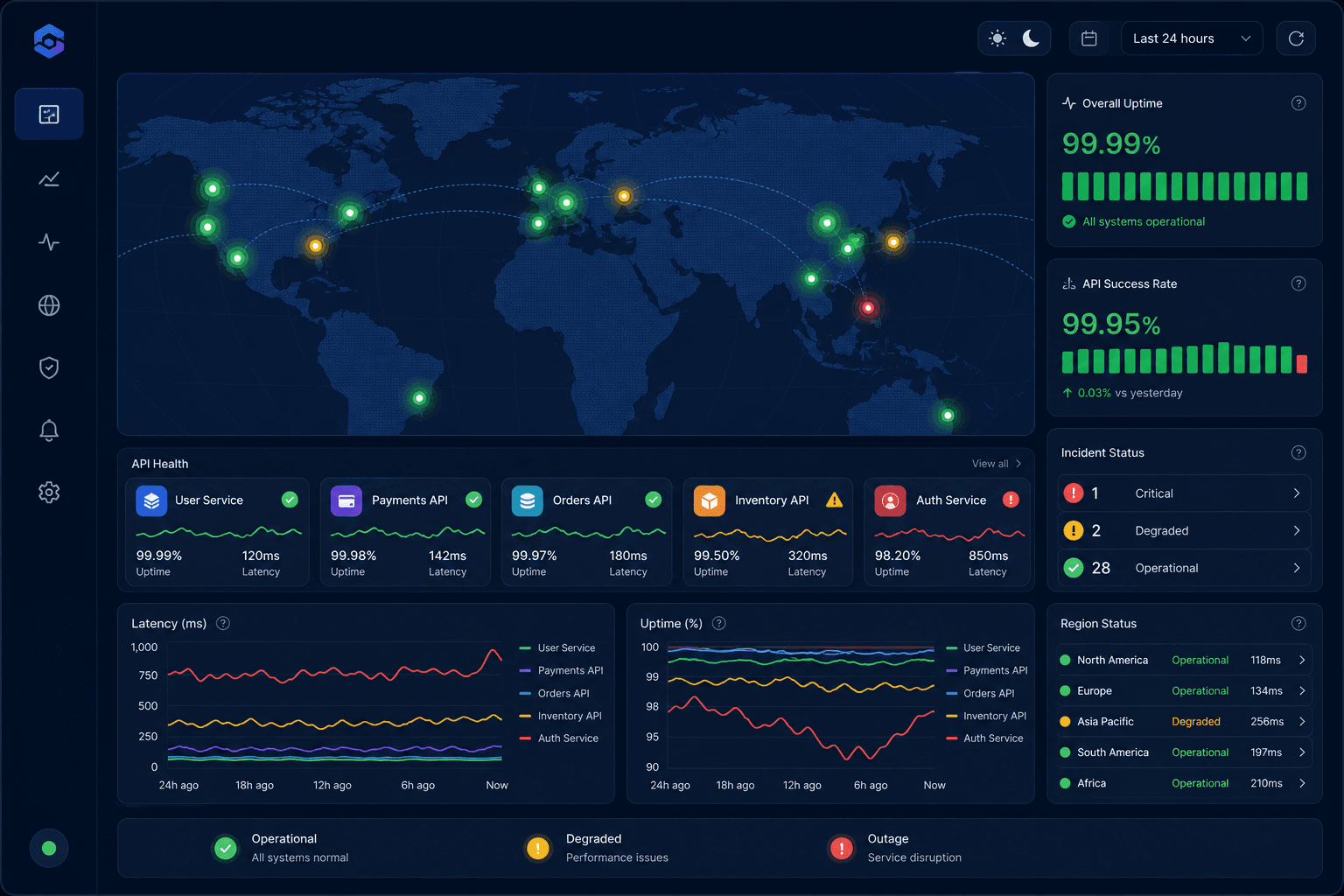
Real-time dashboards speed every incident phase: spot failures sooner, scope user impact from traffic and status codes, diagnose faster and confirm recovery with data.
Customer Login
Login15 blog posts tagged with Website Uptime Monitoring.
How Can Real Time Analytics Dashboards Improve Incident Response?
Real-time dashboards speed every incident phase: spot failures sooner, scope user impact from traffic and status codes, diagnose faster and confirm recovery with data.
How Do You Build an Analytics Dashboard for Website, API, and SSL Monitoring?
Build a monitoring dashboard in seven steps: inventory pages, APIs and certificates, set SLOs, standardize checks, lay out by layer, add thresholds, wire alerts, review.
What Is Ping Monitoring and When Should You Use It Instead of HTTP Checks?
Ping monitoring tests whether a host is reachable at the network layer. Learn when ICMP, TCP or UDP ping beats HTTP checks and why combining both speeds up triage.
How to Build a Multi-Region Monitoring Strategy for SaaS Reliability
Learn how SaaS teams can build a multi-region monitoring strategy that detects regional outages, API degradation, latency spikes, and user-impacting reliability issues faster.
How Can Domain DNS Changes Impact Website Availability and SEO?
Understand how DNS changes affect website availability and SEO performance, from A record misconfigurations and nameserver shifts to TTL mistakes, CNAME breaks, and crawl disruption during migrations.
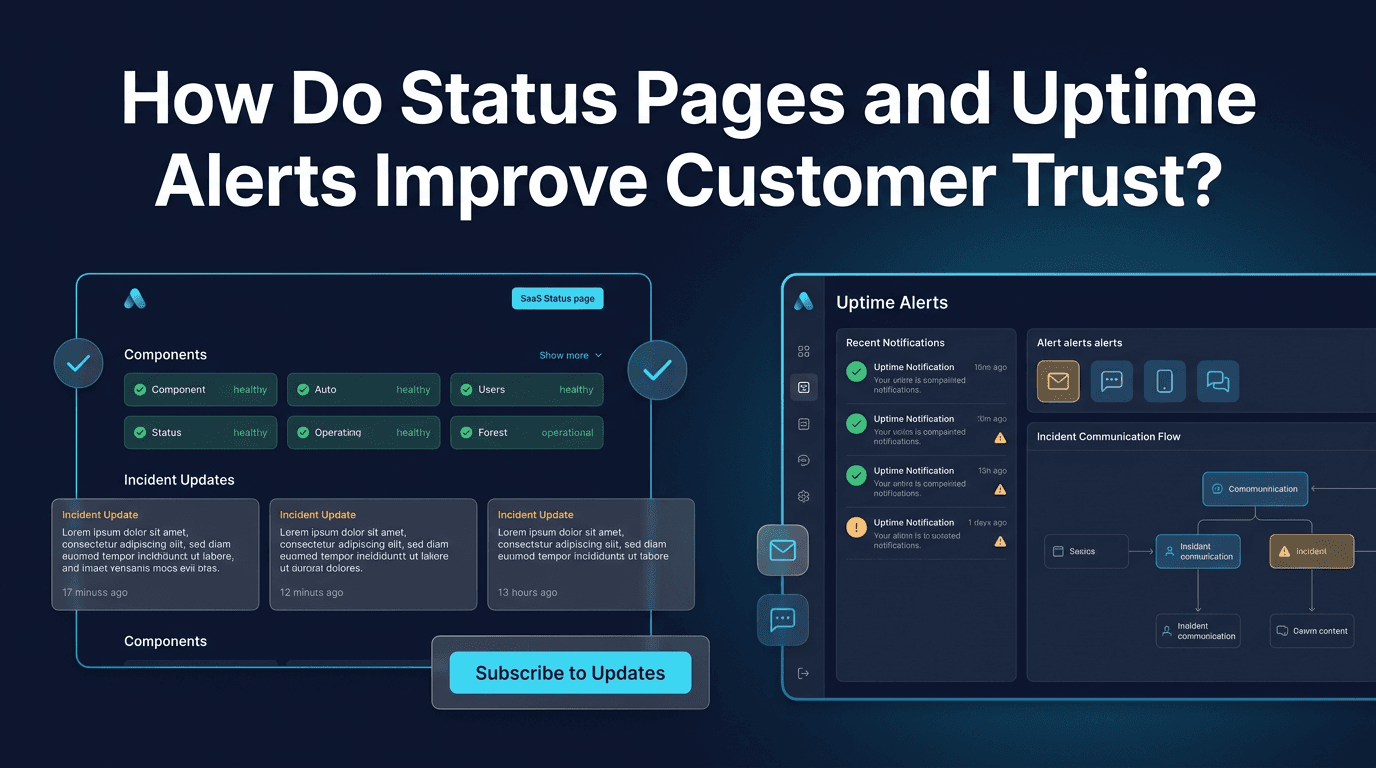
How Do Status Pages and Uptime Alerts Improve Customer Trust?
Learn how status pages and uptime alerts improve customer trust by increasing transparency, speeding incident communication, reducing uncertainty, and setting better expectations during outages.
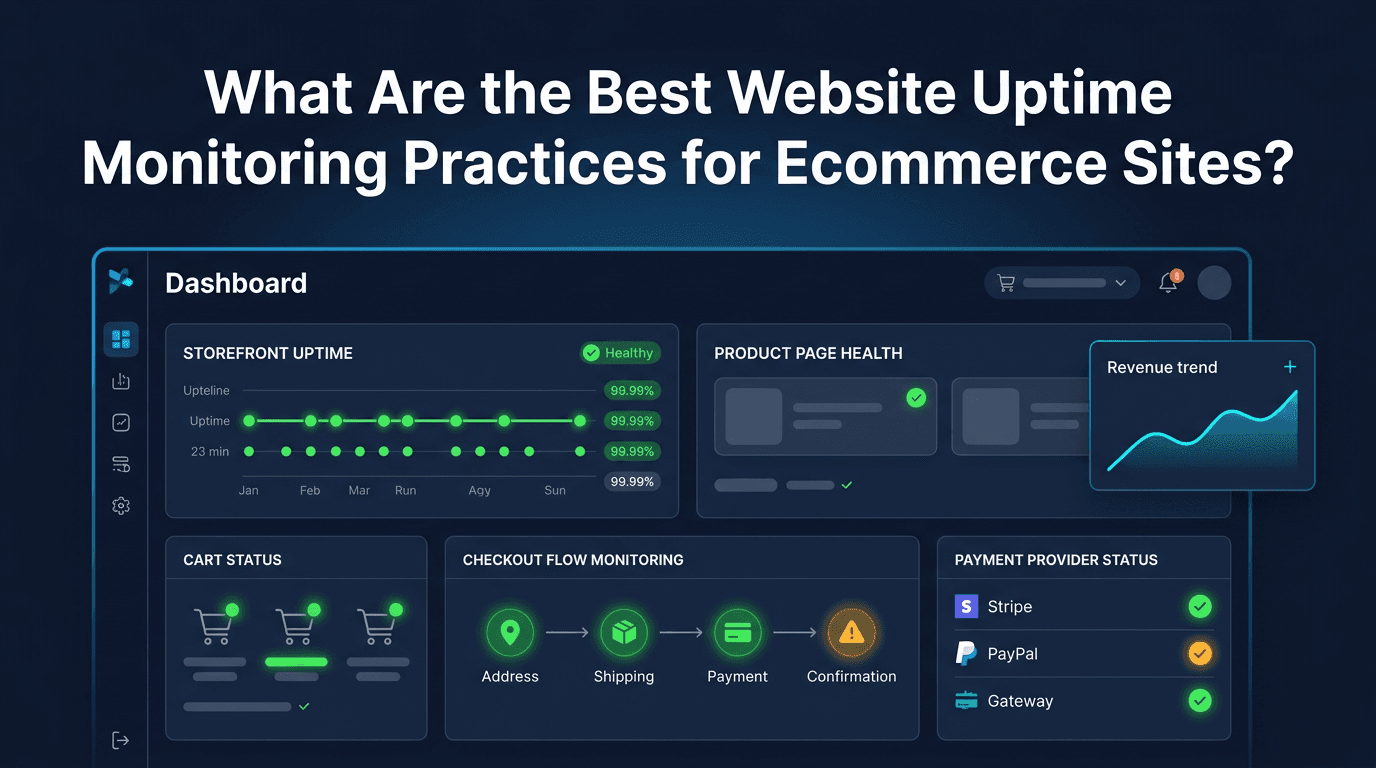
What Are the Best Website Uptime Monitoring Practices for Ecommerce Sites?
Learn the best website uptime monitoring practices for ecommerce sites, including checkout monitoring, cart validation, payment dependency tracking, regional checks, and SEO protection.
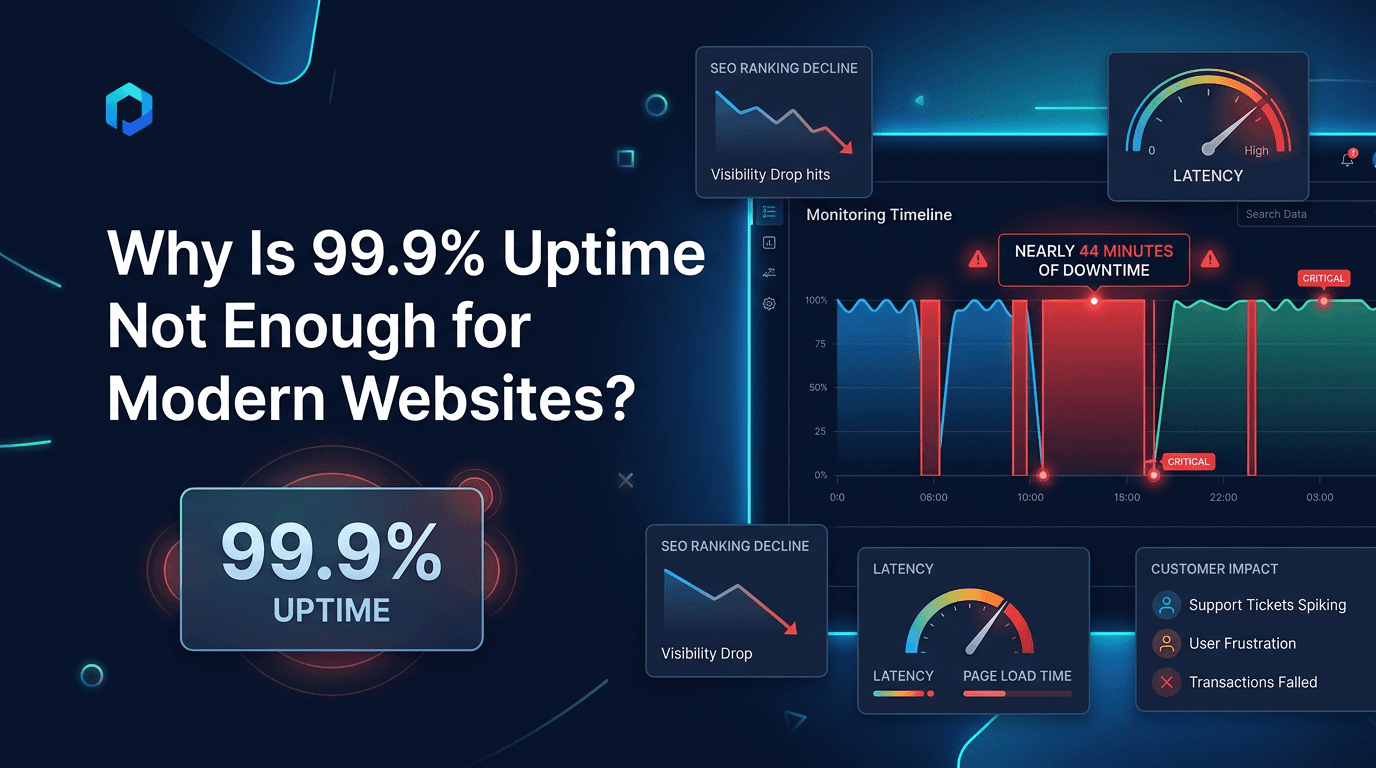
Why Is 99.9% Uptime Not Enough for Modern Websites?
Learn why 99.9% uptime is no longer enough for modern websites, how downtime affects revenue, SEO, and trust, and what reliability targets teams should aim for instead.
How Do You Monitor Website Uptime Across Multiple Global Locations?
Learn how to monitor website uptime across multiple global locations, why regional checks matter, and how to reduce false positives while protecting SEO and user experience.
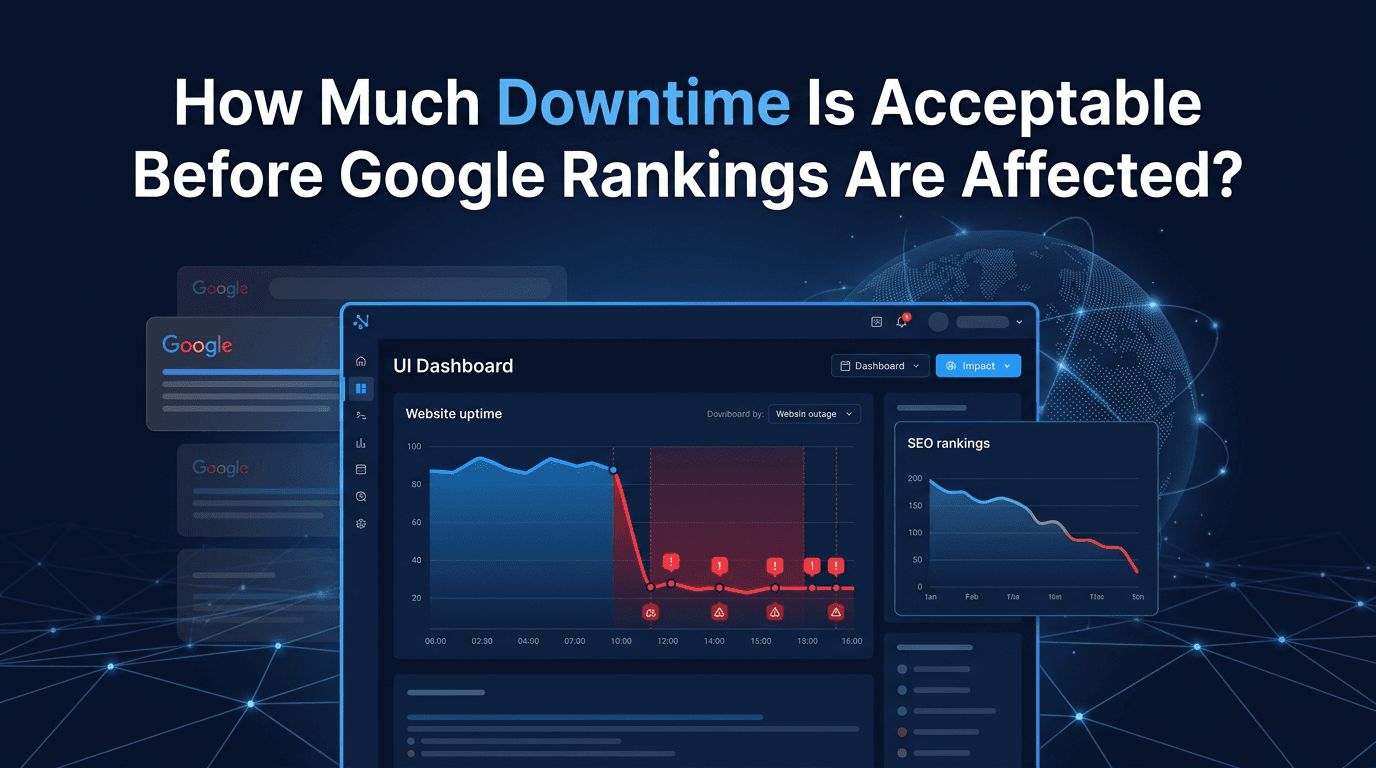
How Much Downtime Is Acceptable Before Google Rankings Are Affected?
Learn how much website downtime is acceptable before Google rankings are affected, how outages impact crawling and indexing, and what teams should do to reduce SEO risk.
What Is Website Uptime Monitoring and Why Does It Matter for SEO?
Learn what website uptime monitoring is, how it works, and why it matters for SEO, crawlability, user trust, and long-term organic growth.
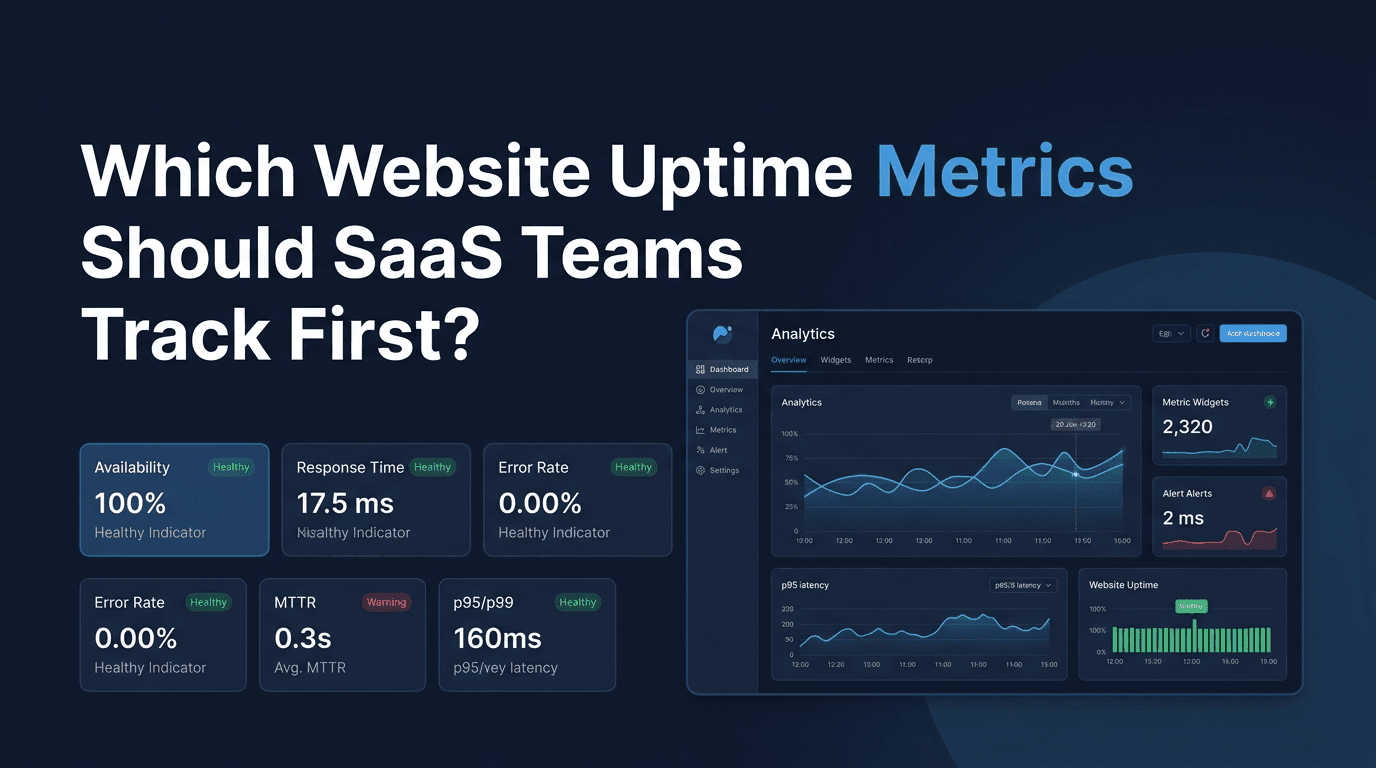
Which Website Uptime Metrics Should SaaS Teams Track First?
Learn which website uptime metrics SaaS teams should track first, including availability, latency, error rate, MTTR, and user-impact signals that improve reliability.
How to Reduce Website Downtime in 2026: 12 Practical Strategies That Actually Work
Learn how to reduce website downtime in 2026 with practical strategies covering monitoring, failover, alerting, incident response, SEO protection, and infrastructure resilience.
What Is Website Uptime Monitoring? Complete Guide for 2026
Learn what website uptime monitoring is, why it matters for revenue and SEO, best practices for check intervals and alerting, and how to monitor from global locations.
Website Uptime Monitoring Checklist for 2026: 15 Best Practices to Prevent Downtime
A practical website uptime monitoring checklist for 2026 covering check intervals, global monitoring locations, content validation, alerting, SLA reporting, and SEO protection.
This Website Uptime Monitoring hub groups the latest UpScanX articles so you can go from curiosity to implementation without digging through the full archive. Page 1 lists up to 20 of 15 posts on this topic.
Most teams do not fix reliability with a single check. It takes clear ownership, useful alerts, trend analysis, and linking technical signals to user impact. That is why focused topic pages stay valuable over time.
Reading several angles on the same topic helps you compare approaches—whether you are improving uptime, reducing alert noise, hardening security, or scaling operations.
The strongest posts emphasize practical systems, measurable trade-offs, and repeatable habits: what to monitor, how to alert, how to prevent downtime, and how engineering choices affect business outcomes.
Use this page as a lightweight learning path: start with the article closest to your problem, then explore related guides.