How Can Port Monitoring Detect Silent Failures Before HTTP Monitoring Does?
Port monitoring catches silent failures HTTP checks miss: dead database and queue ports, rising TCP connect times, down replicas, and firewall changes on non-HTTP ports.
Customer Login
Login17 blog posts tagged with Network Monitoring.
How Can Port Monitoring Detect Silent Failures Before HTTP Monitoring Does?
Port monitoring catches silent failures HTTP checks miss: dead database and queue ports, rising TCP connect times, down replicas, and firewall changes on non-HTTP ports.
How Do You Monitor Open Ports for Web Servers, Databases, and Mail Services?
Monitor web, database, and mail ports by validating each protocol's response, not just the TCP connect, and alerting when databases become publicly reachable.
What Are the Best Port Monitoring Tools for DevOps and IT Teams?
The best port monitoring tools pair continuous TCP/UDP checks with protocol-aware validation and change detection. Compare scanners, self-hosted, and SaaS options.
What Is Port Monitoring and Why Does It Matter for Network Reliability?
Port monitoring checks whether a service is accepting connections on a specific TCP or UDP port. Learn what it catches that ping and HTTP checks miss, and why it matters.
Which Ports Should You Monitor First on Production Infrastructure?
Monitor public entry points first (443, 80, API, DNS, SMTP), then internal databases, caches and queues, then management ports that should never be public.
Why Is Port Monitoring Important for Security, Uptime, and Compliance?
Port monitoring catches exposed services, silent service failures and configuration drift early, and leaves a continuous record that supports security audits.
How Do You Monitor Packet Loss and Latency Across Global Regions?
Monitor packet loss and latency globally by probing from regions near your users, setting per-region baselines, tracking p95 and jitter, and alerting on quorum.
How Does Ping Monitoring Help Detect Network Issues Before Users Notice?
Ping monitoring spots latency creep, jitter, intermittent packet loss and route changes early, so teams can fix network degradation before it becomes a visible outage.
What Are the Best Ping Monitoring Tools for Servers, Routers, and Websites?
The best ping monitoring setup pairs an external multi-location monitor for websites with an internal SNMP-capable tool for routers. Compare the main tool types.
What Is Ping Monitoring and When Should You Use It Instead of HTTP Checks?
Ping monitoring tests whether a host is reachable at the network layer. Learn when ICMP, TCP or UDP ping beats HTTP checks and why combining both speeds up triage.
Which Ping Monitoring Thresholds Should You Set for Fast Incident Detection?
Start with 30-60s ping intervals, 2-3 consecutive failures, a 2-of-3 location quorum, latency alerts at 2x and 3x baseline, and packet loss alerts at 2% and 10%.
Why Is Ping Monitoring Still Important in Cloud and Kubernetes Environments?
Managed cloud and Kubernetes don't remove network failures. Ping and TCP checks catch security group, NAT, peering, DNS and cross-region issues that probes miss.
A practical checklist for monitoring critical open ports in 2026, covering reachability, unexpected exposure, TCP and UDP health, security baselines, and service ownership.
Ping Monitoring Guide: Latency, Packet Loss, and Network Reachability
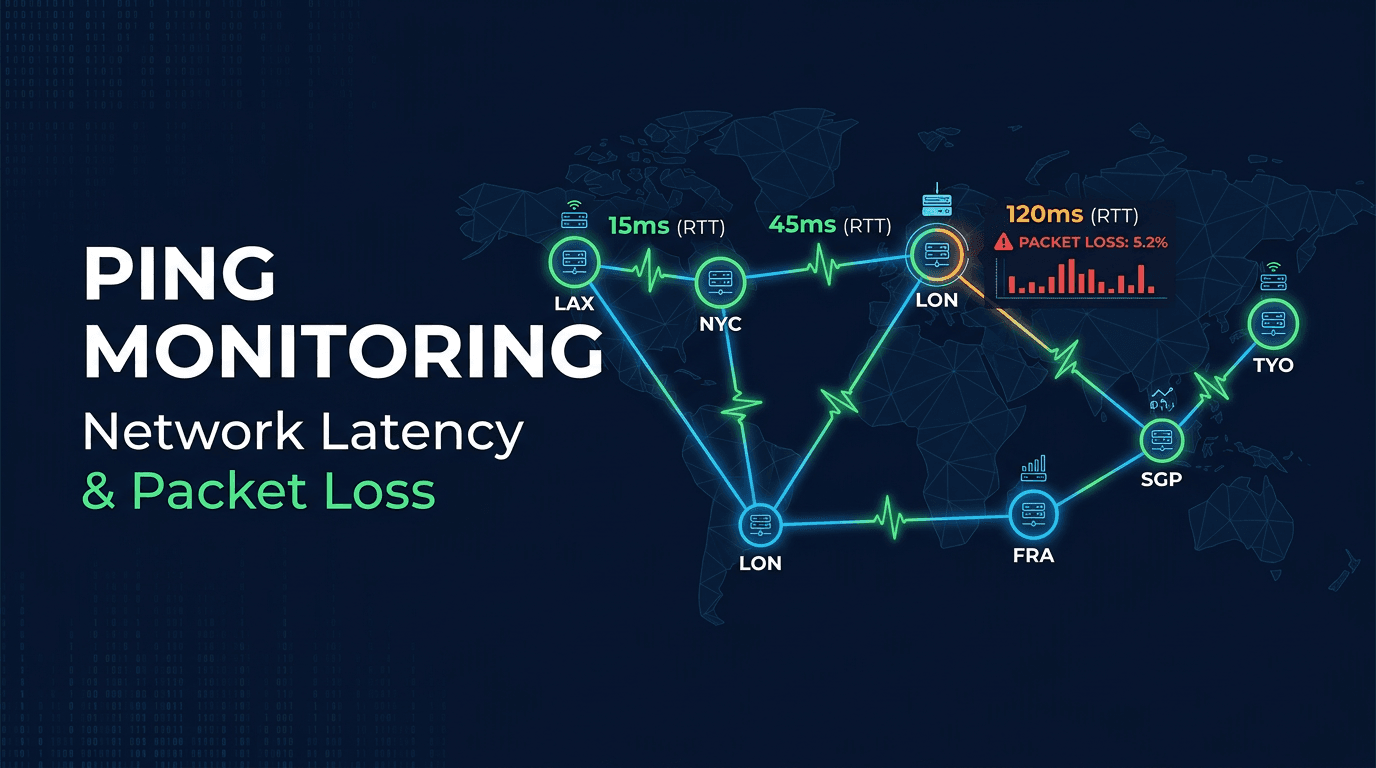
Learn how ping monitoring works — measure network latency, detect packet loss, track jitter, and monitor server reachability from multiple global locations with ICMP and TCP ping.
Port Monitoring Guide: TCP/UDP Service Availability Monitoring
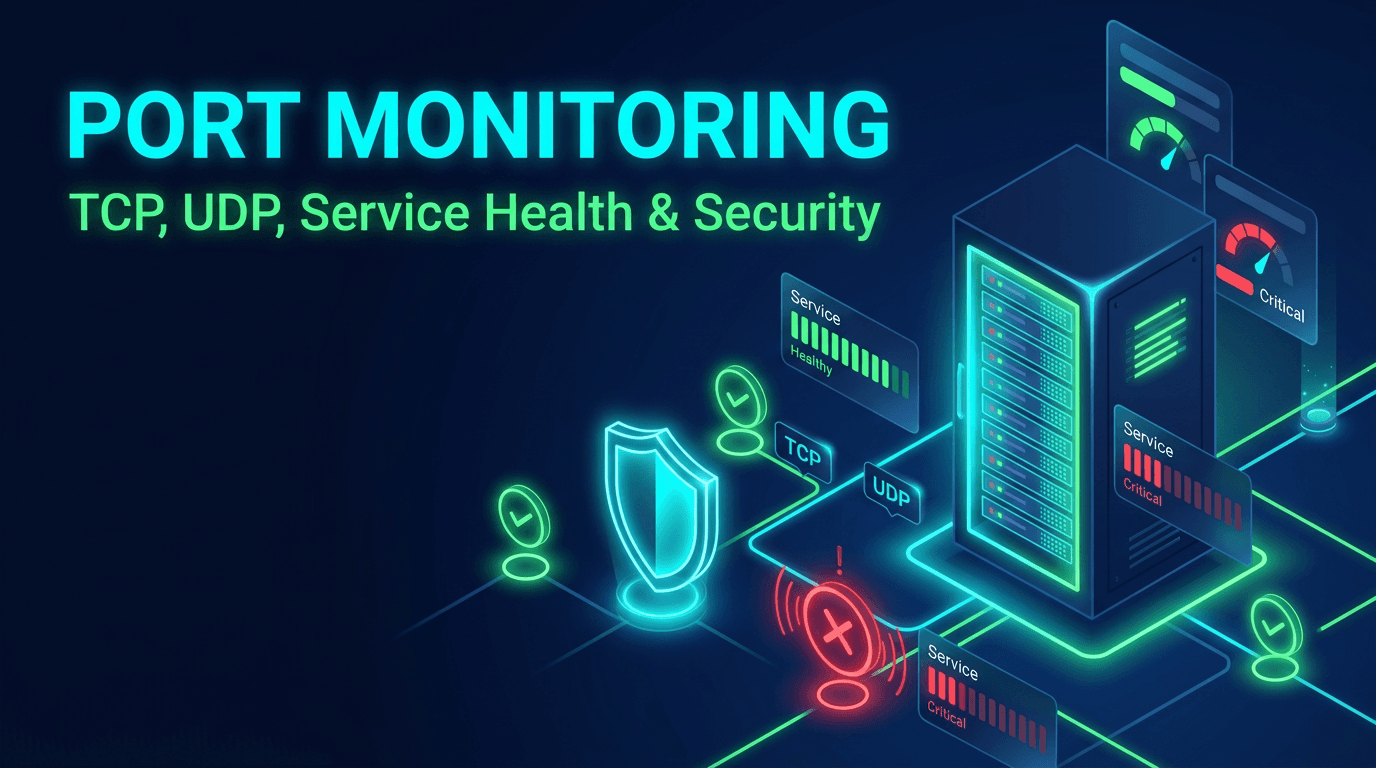
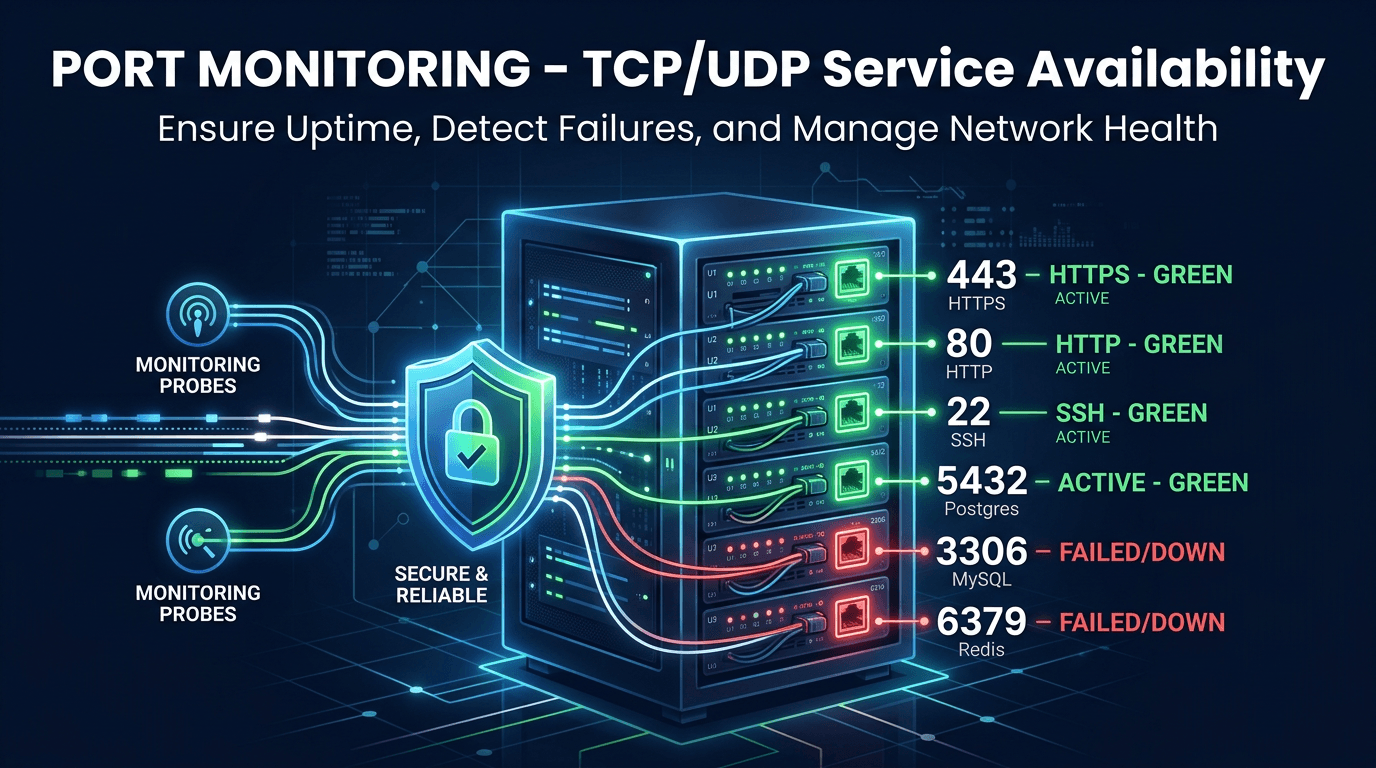
Complete port monitoring guide — monitor TCP and UDP ports, detect service failures, validate database and application server availability, and improve infrastructure security.
Network Latency Monitoring Guide for 2026: How to Detect Slow Paths Before Users Feel Them
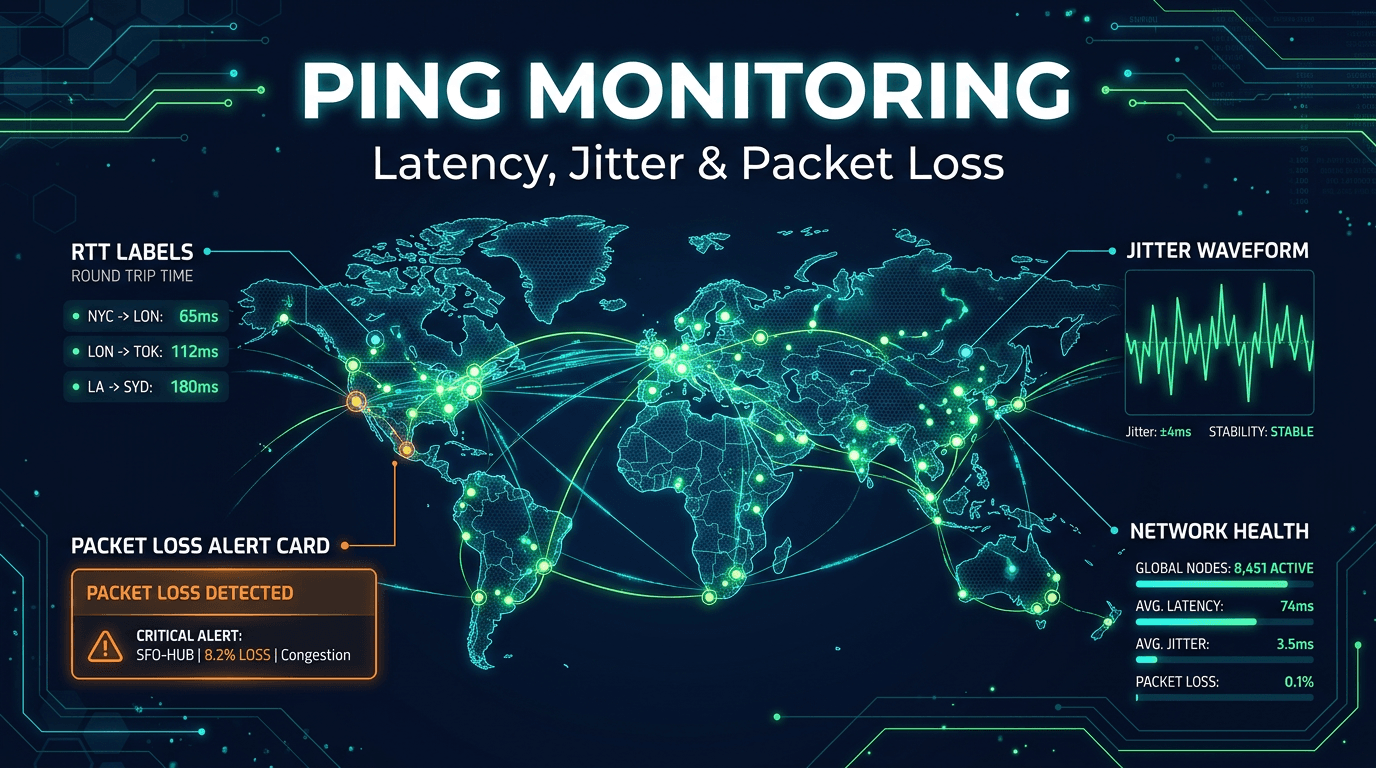
A practical guide to network latency monitoring in 2026, covering RTT, jitter, packet loss, regional analysis, alert thresholds, and how to catch slow paths early.
Ping Monitoring Best Practices for 2026: Latency, Jitter, and Packet Loss Explained
Learn the best ping monitoring practices for 2026, including how to track latency, jitter, packet loss, multi-region reachability, and early network degradation.
This Network Monitoring hub groups the latest UpScanX articles so you can go from curiosity to implementation without digging through the full archive. Page 1 lists up to 20 of 17 posts on this topic.
Most teams do not fix reliability with a single check. It takes clear ownership, useful alerts, trend analysis, and linking technical signals to user impact. That is why focused topic pages stay valuable over time.
Reading several angles on the same topic helps you compare approaches—whether you are improving uptime, reducing alert noise, hardening security, or scaling operations.
The strongest posts emphasize practical systems, measurable trade-offs, and repeatable habits: what to monitor, how to alert, how to prevent downtime, and how engineering choices affect business outcomes.
Use this page as a lightweight learning path: start with the article closest to your problem, then explore related guides.