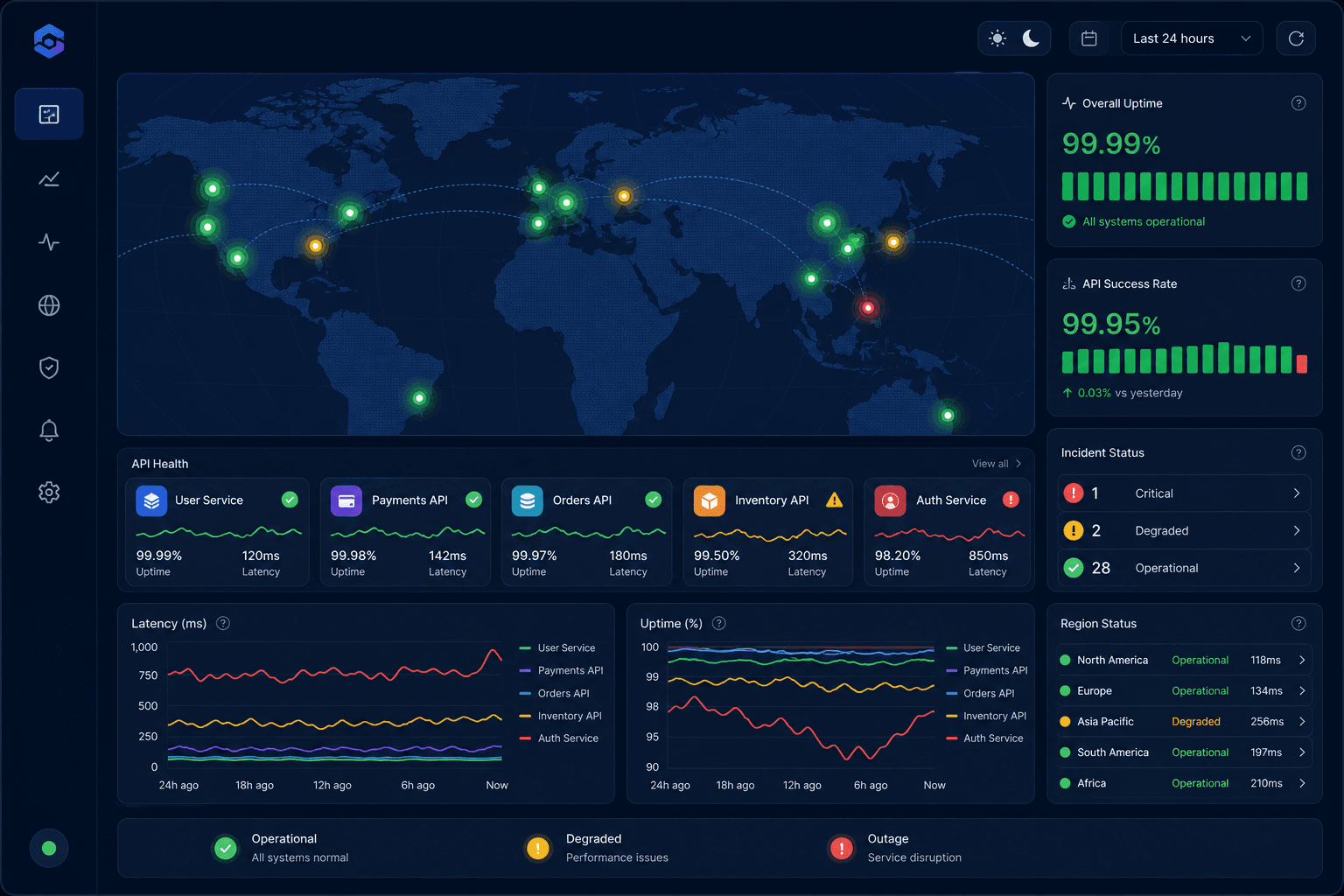
How Do You Build an Analytics Dashboard for Website, API, and SSL Monitoring?
Build a monitoring dashboard in seven steps: inventory pages, APIs and certificates, set SLOs, standardize checks, lay out by layer, add thresholds, wire alerts, review.
Customer Login
Login13 blog posts tagged with API Monitoring.
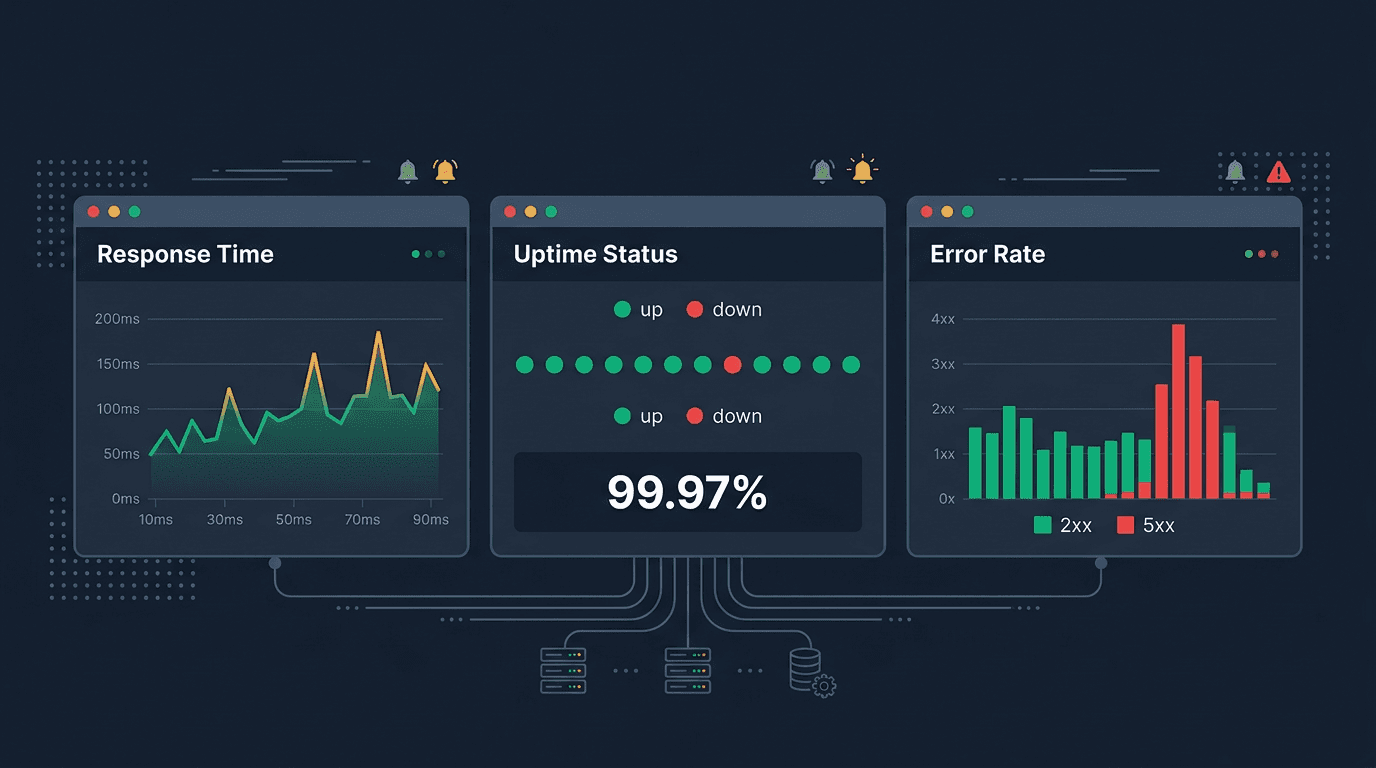
How Do You Build an Analytics Dashboard for Website, API, and SSL Monitoring?
Build a monitoring dashboard in seven steps: inventory pages, APIs and certificates, set SLOs, standardize checks, lay out by layer, add thresholds, wire alerts, review.
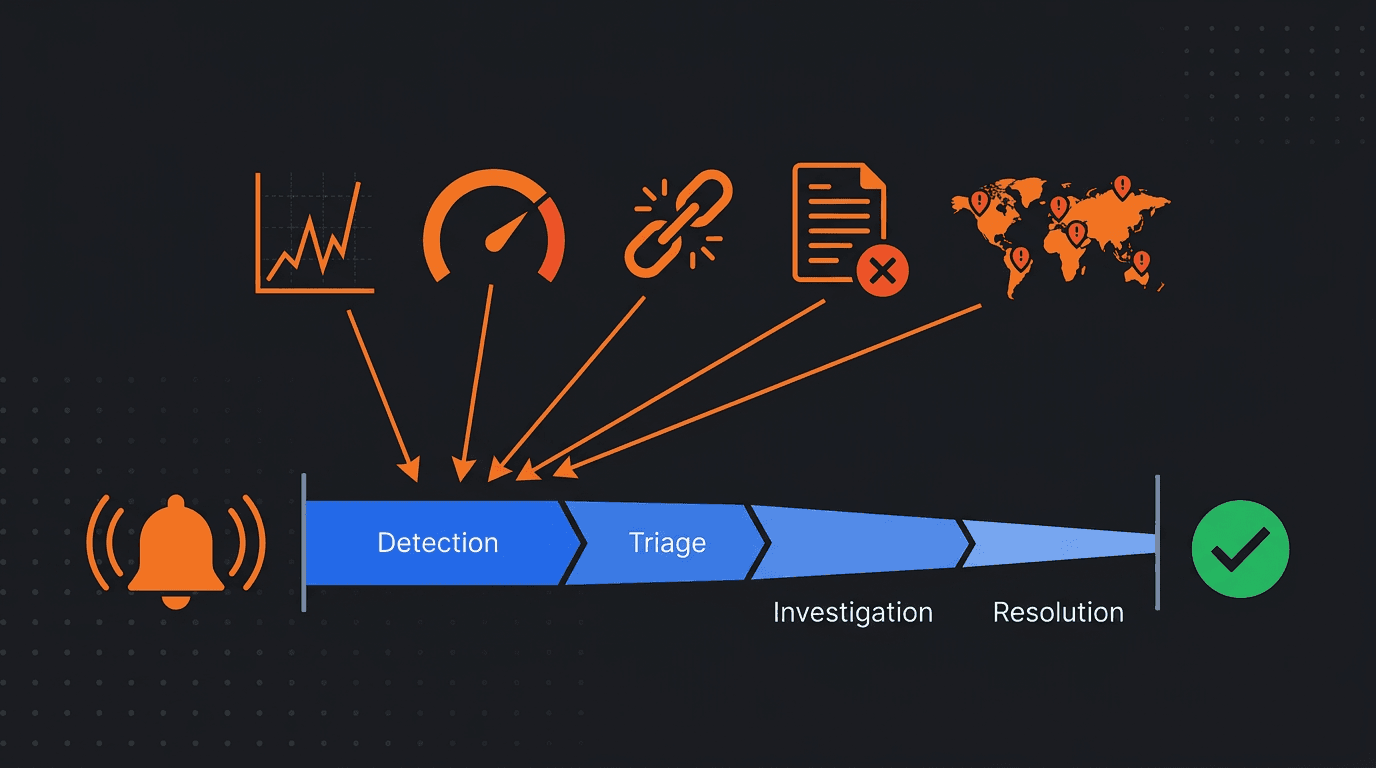
What Should a Good AI Report Include After an Uptime or API Incident?
A good AI incident report covers impact, a detection-to-resolution timeline, correlated signals, likely root cause with confidence and evidence, unknowns, and actions.
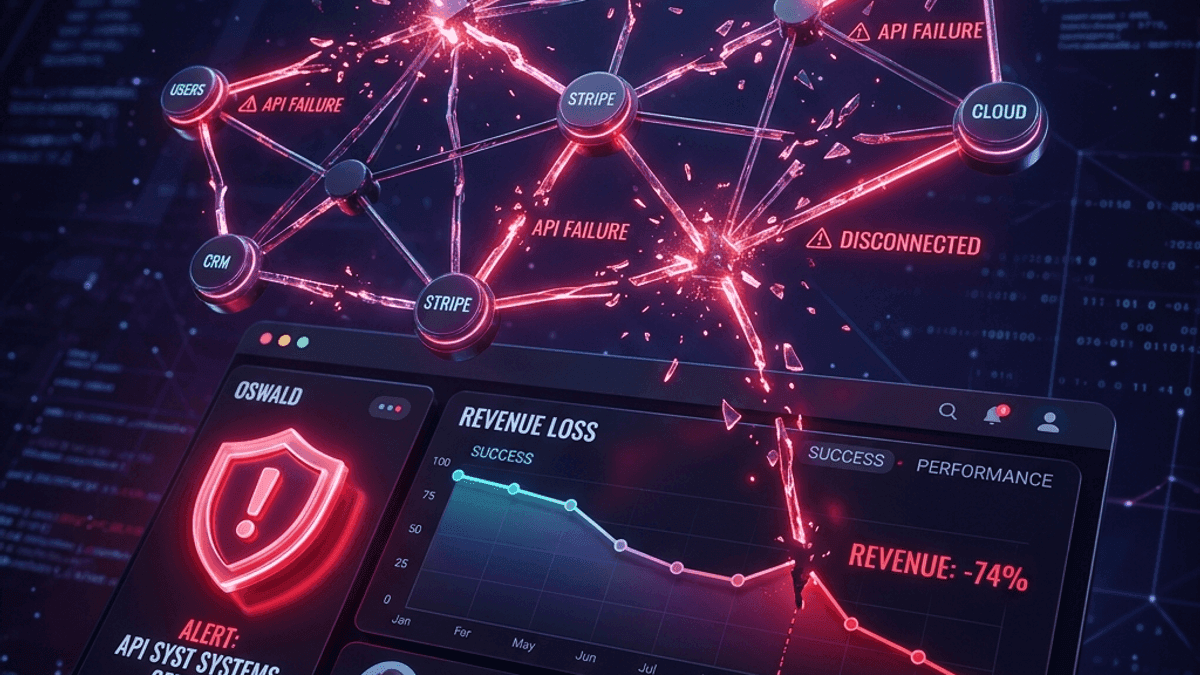
How Do API Failures Affect Customer Experience, Revenue, and Retention?
API outages and latency spikes are the silent killers of modern SaaS businesses. Discover how API failures degrade customer experience, leak revenue through involuntary churn, and destroy user retention.
What Are the Best API Monitoring Tools for Startups and Enterprise Teams?
Discover the best API monitoring tools for startups and enterprise teams in 2026. Compare Datadog, Checkly, Moesif, Better Stack, and Treblle to find the perfect observability fit for your stack.
How to Build a Multi-Region Monitoring Strategy for SaaS Reliability
Learn how SaaS teams can build a multi-region monitoring strategy that detects regional outages, API degradation, latency spikes, and user-impacting reliability issues faster.
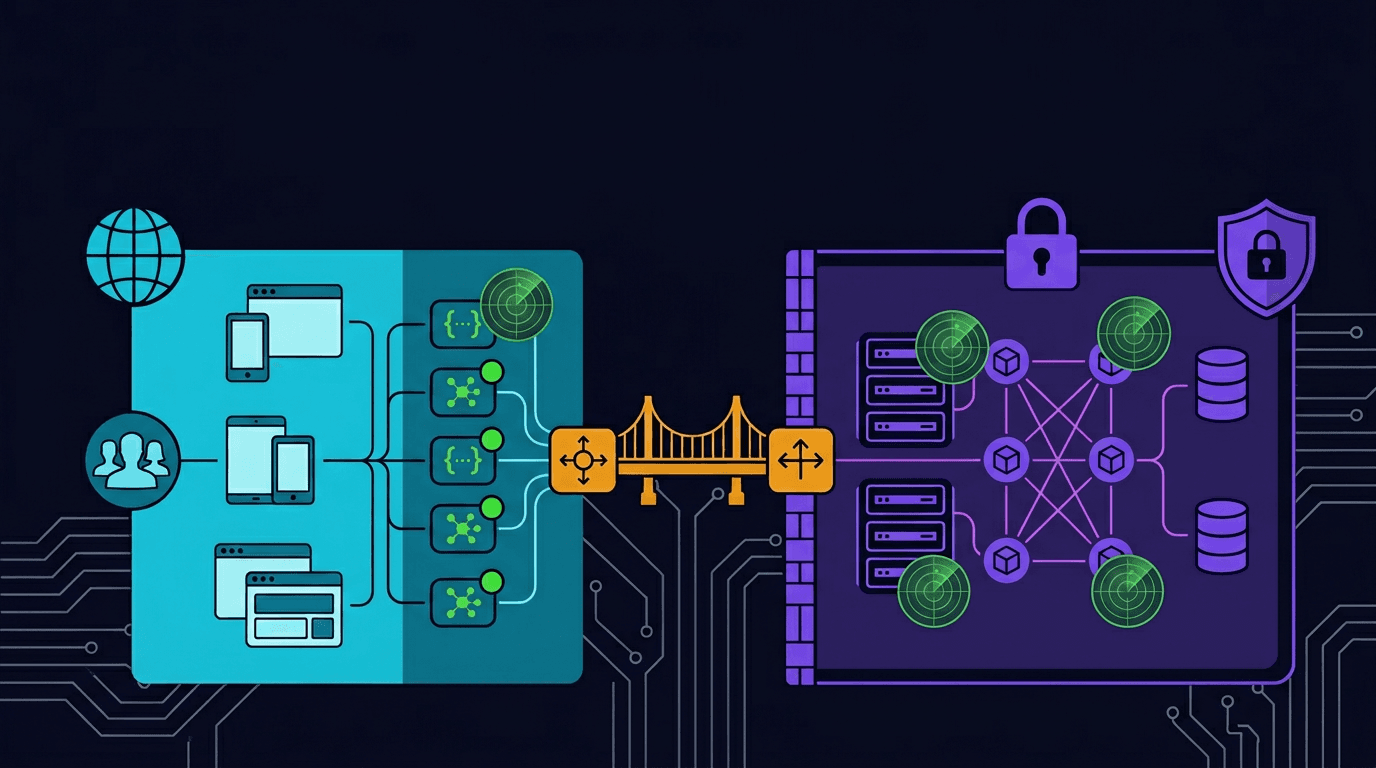
How Can You Build an API Monitoring Strategy for Public and Private Endpoints?
Learn how to build an API monitoring strategy that covers both public and private endpoints, including authentication handling, access methods for internal APIs, distinct SLOs, security considerations, and unified visibility.
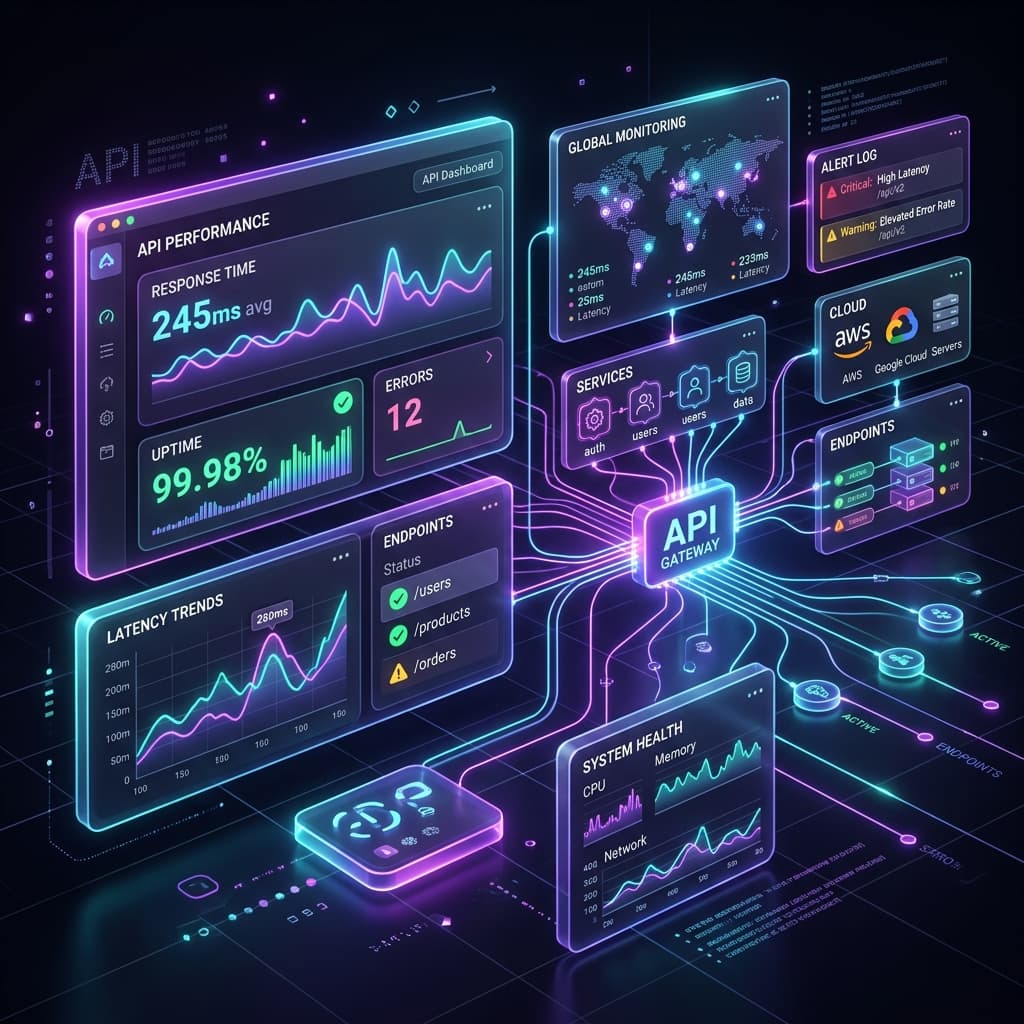
How Do You Monitor API Response Time, Uptime, and Error Rates in Real Time?
Learn how to monitor API response time, uptime, and error rates in real time using synthetic checks, multi-region probes, percentile dashboards, error classification, alert thresholds, and incident response workflows.
Which API Monitoring Alerts Reduce Incident Response Time the Most?
Learn which API monitoring alerts reduce incident response time the most, from multi-region availability failures and error rate spikes to latency percentile breaches, dependency alerts, and response validation failures.
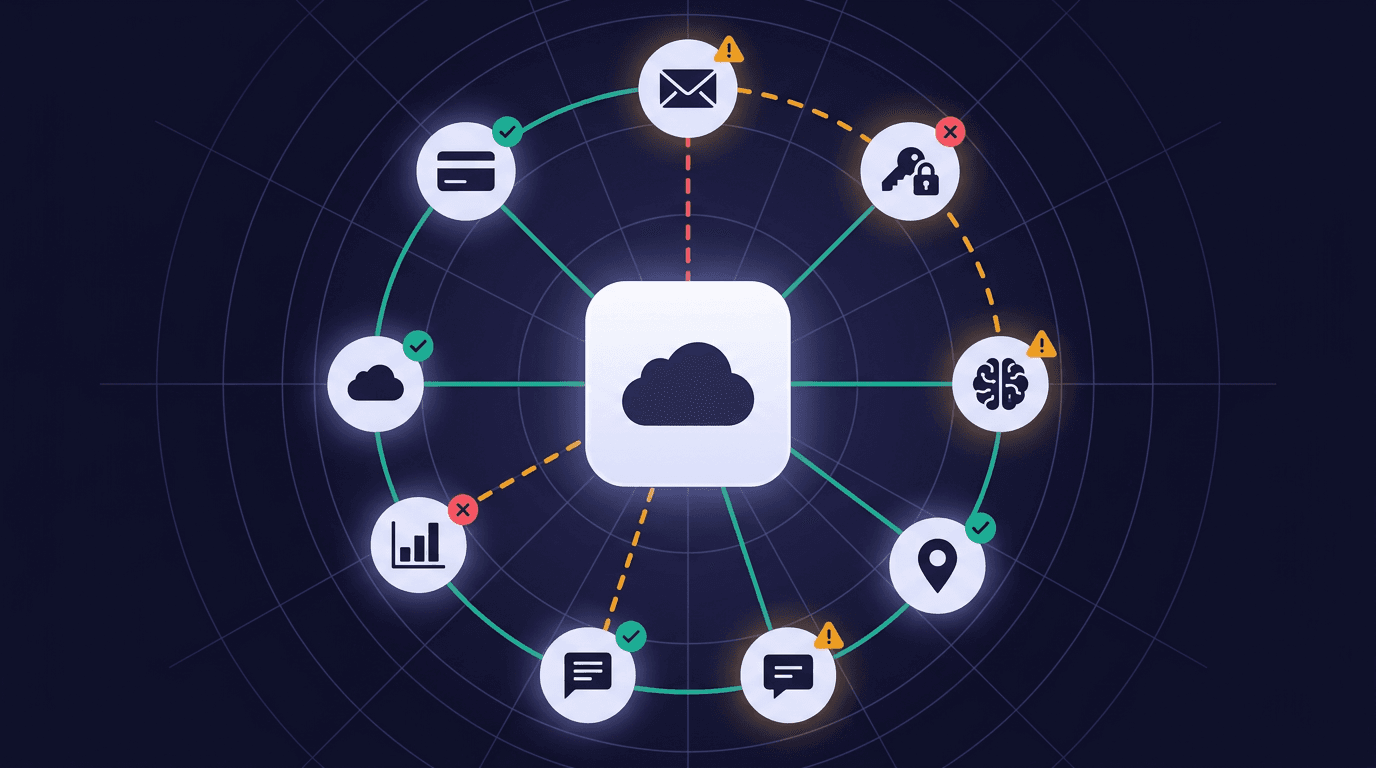
Why Is Third-Party API Monitoring Essential for Modern SaaS Products?
Understand why third-party API monitoring is essential for SaaS products, how external dependency failures impact your customers, and how to build monitoring that protects against vendor outages you cannot control.
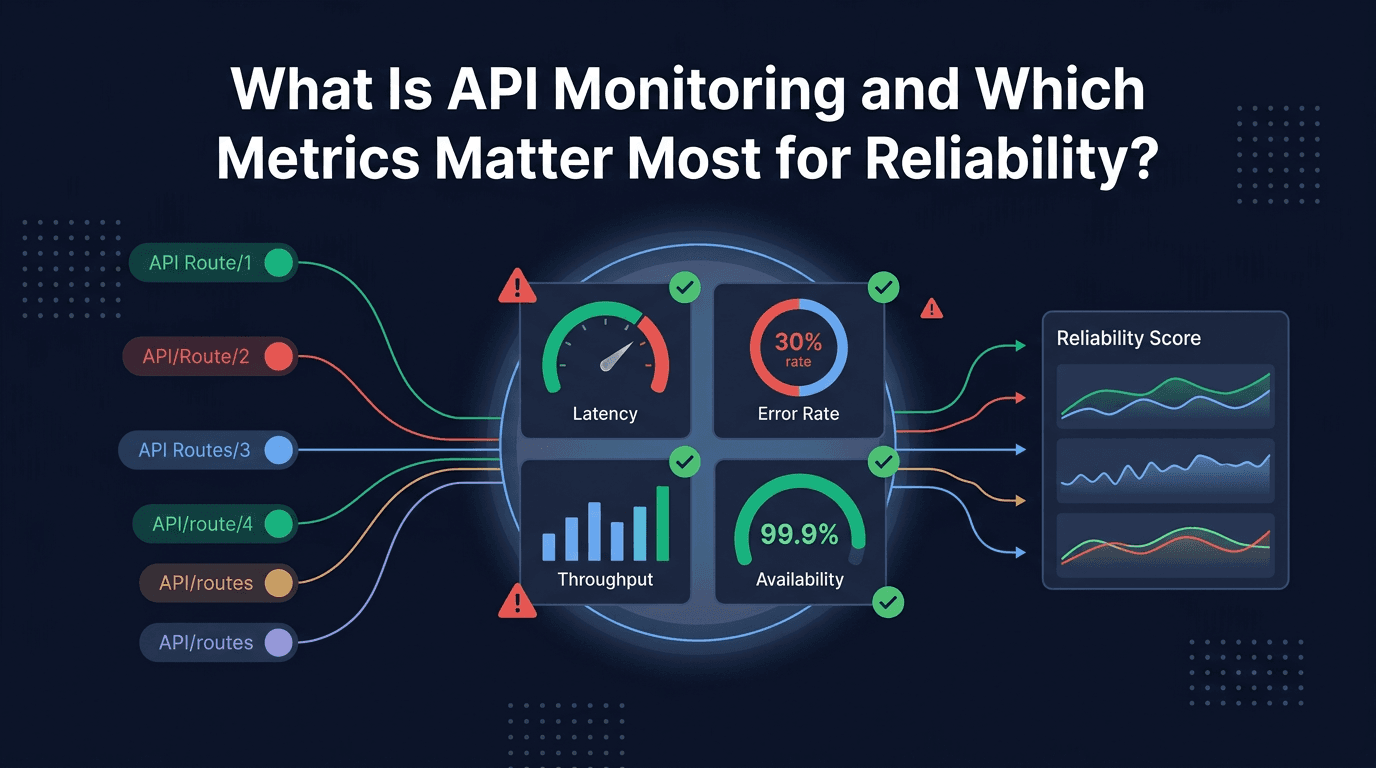
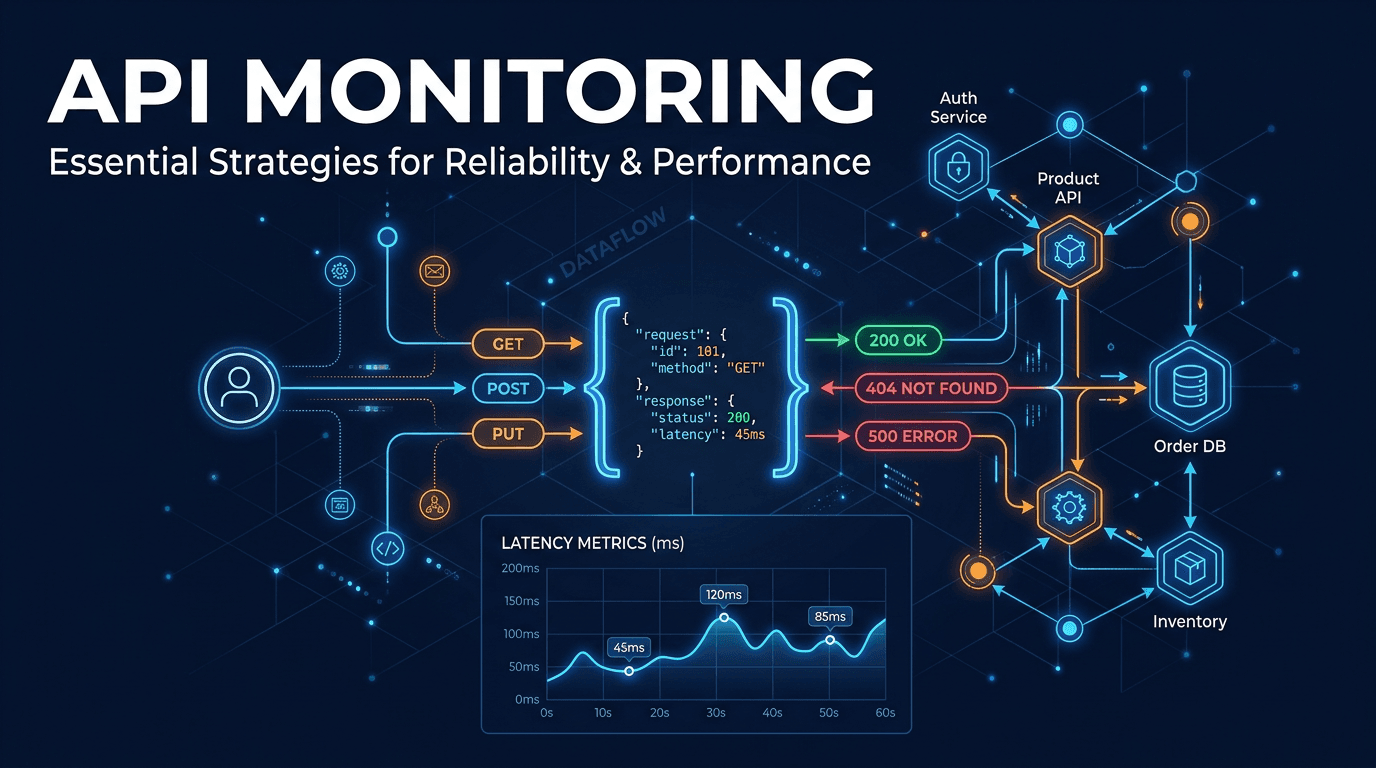
What Is API Monitoring and Which Metrics Matter Most for Reliability?
Learn what API monitoring is and which metrics matter most for reliability, including availability, latency percentiles, error rates, time to first byte, throughput, timeout rates, and dependency health.
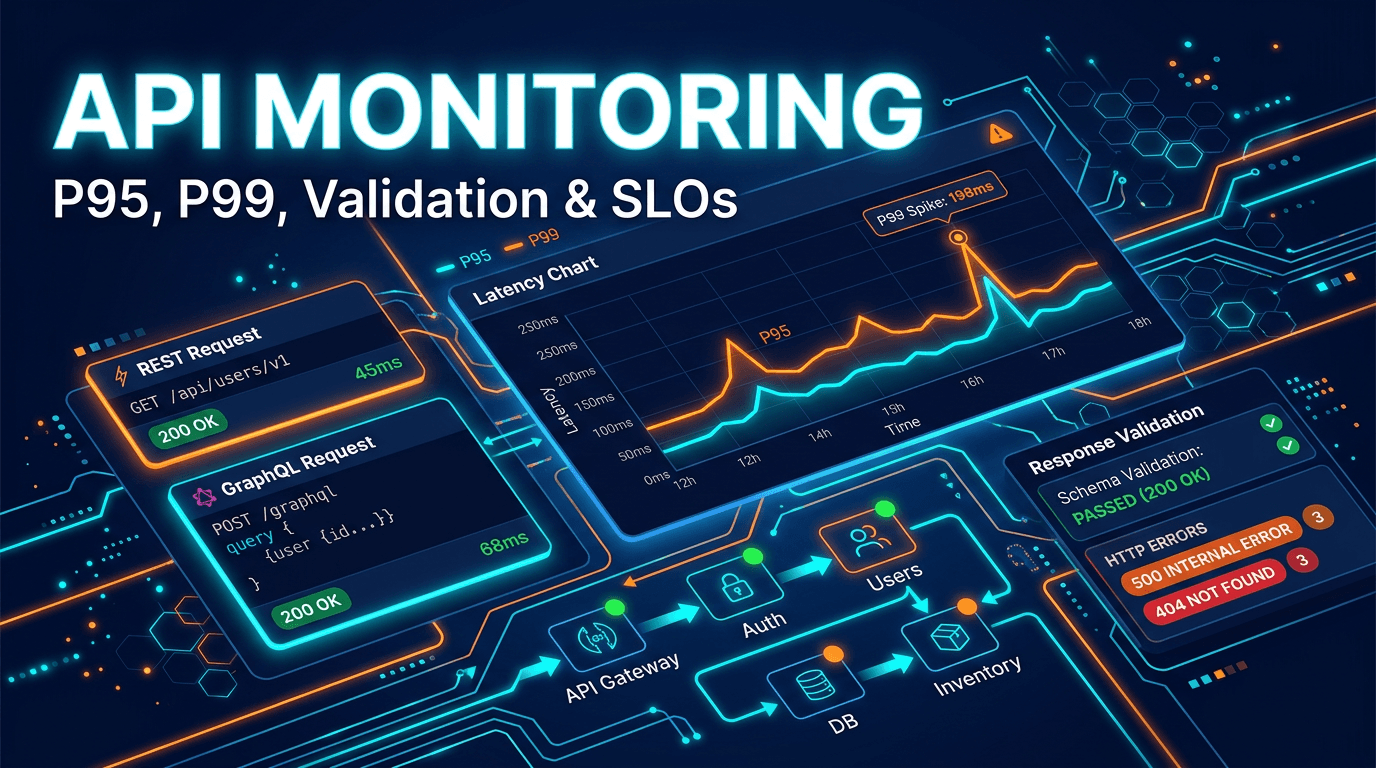
API Monitoring Best Practices for 2026: P95, P99, Synthetic Checks, and Response Validation
A practical 2026 guide to API monitoring best practices, including REST and GraphQL checks, P95 and P99 latency, synthetic workflows, schema validation, SLOs, and alert design.
API SLO Monitoring Guide for 2026: How to Use Error Budgets, P95, and P99 to Improve Reliability
A practical API SLO monitoring guide for 2026 covering service level objectives, error budgets, P95 and P99 latency, alerting, and how to align API monitoring with real user impact.
API Monitoring Guide: Availability, Performance, and Response Validation
Complete API monitoring guide — monitor REST and GraphQL endpoints for availability, validate response schemas, track performance metrics, and detect errors before users are affected.
This API Monitoring hub groups the latest UpScanX articles so you can go from curiosity to implementation without digging through the full archive. Page 1 lists up to 20 of 13 posts on this topic.
Most teams do not fix reliability with a single check. It takes clear ownership, useful alerts, trend analysis, and linking technical signals to user impact. That is why focused topic pages stay valuable over time.
Reading several angles on the same topic helps you compare approaches—whether you are improving uptime, reducing alert noise, hardening security, or scaling operations.
The strongest posts emphasize practical systems, measurable trade-offs, and repeatable habits: what to monitor, how to alert, how to prevent downtime, and how engineering choices affect business outcomes.
Use this page as a lightweight learning path: start with the article closest to your problem, then explore related guides.